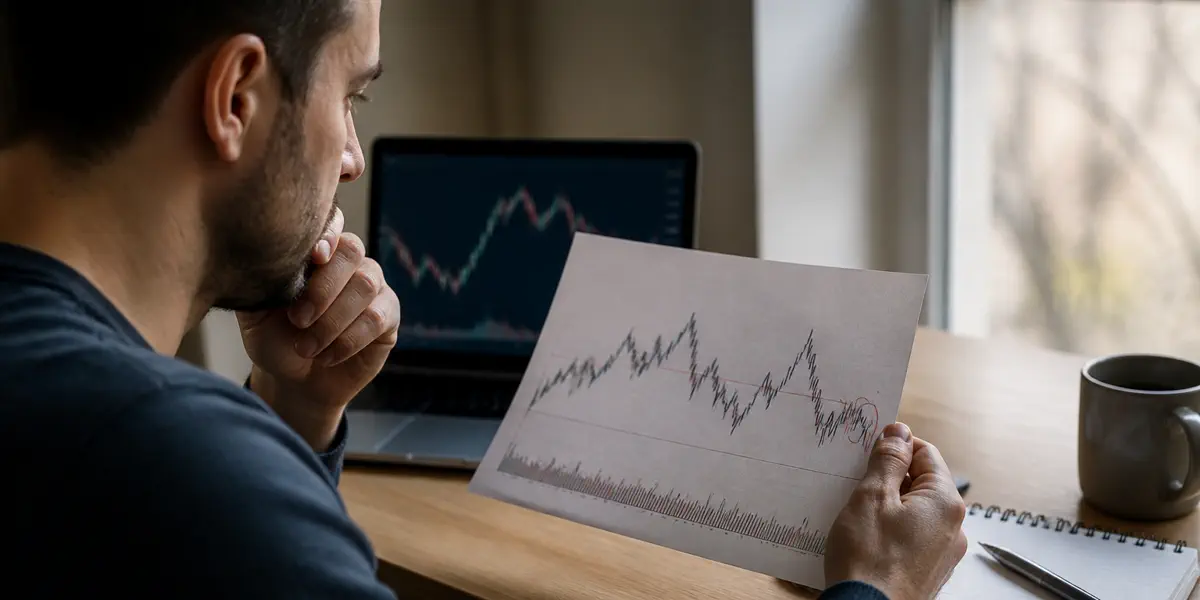
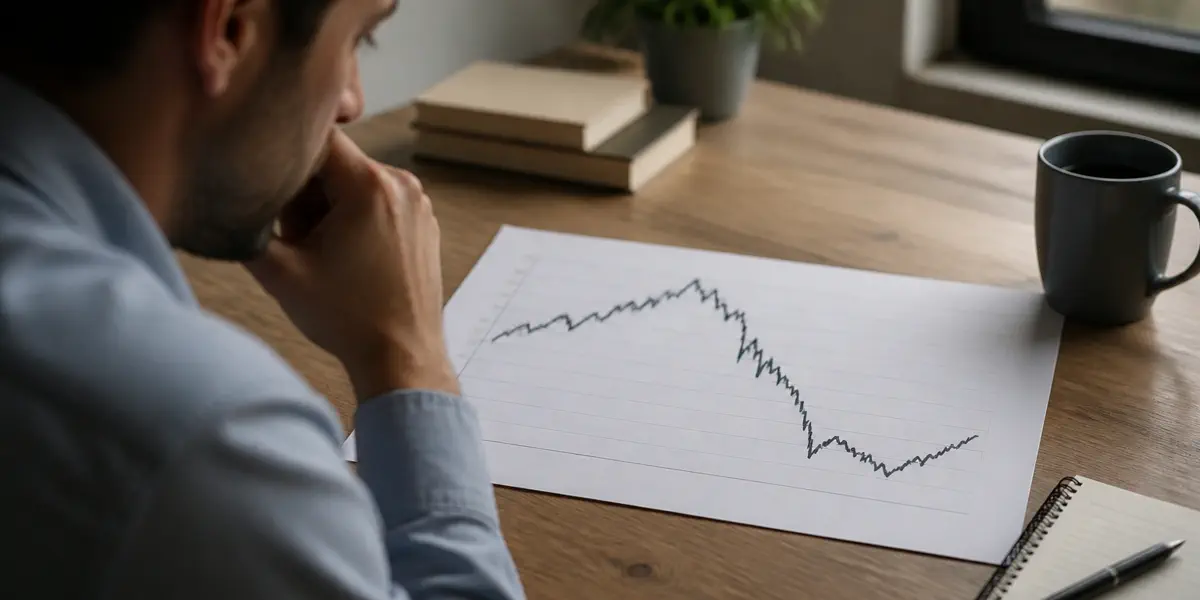
One classic behavioral-economics finding: people feel a loss roughly twice as strongly as a gain of equal size. So your purchase price acts like gravity in memory. Drop below it and it stings; rise above it and you're less thrilled than you'd expect.
That asymmetry leaks into decisions. Waiting for "break-even" makes you miss better opportunities; locking in small gains too fast leaves long compounding on the table while you walk away.
The peak-end effect
Memory doesn't store the average. It grabs two scenes — the peak and the ending — and compresses everything else. Ask someone about their 2020 portfolio and they'll vividly recount the March crash and the year-end recovery, but the grinding middle? Mostly gone. Here's the real problem: that compressed memory quietly becomes the premise for the next decision.
Auditing your own price memory
Just asking where a memory came from drains its power. Questions to put to yourself:
- What reference point makes this price feel "cheap" or "expensive"?
- Did that reference come from a purchase, a headline, or a friend's offhand comment?
- How much have inflation, FX, and taxes moved since then?
- Is today's decision protecting the old reference, or serving a future plan?
Where PriceGuess fits in
Repeat the same assets in Chart Quiz and Higher or Lower and your price memory slowly gets rewritten. That's the training effect. Over time the "first impression" loses weight, and a sense of range takes its place.
Same number, different people
It gets obvious when the number is identical down to the last digit. Suppose an asset trades at roughly 50,000 won as of this writing. Three people.
- Jieun first saw it at 30,000 won. To her, 50,000 is an "already-run-up, expensive" price.
- Hyunwoo once watched the screen show 90,000 won. To him, 50,000 is "way down, cheap."
- Minseo is seeing it for the first time today. No past to compare against, so 50,000 is just 50,000.
The number on the tag is exactly the same for all three. The only thing that differs is the past-price memory each one carries. Jieun's 30,000 and Hyunwoo's 90,000 were each just "a number seen once" — neither is a yardstick for whether today's 50,000 is cheap or dear. Yet memory pulls on the present judgment as if it were the answer key. When people read the same data and reach opposite conclusions, the cause isn't the data — it's the reference point in their heads.
Three common misconceptions
Myth 1: "I read charts objectively." Almost everyone believes they see only the numbers. In practice, they quietly lay down the first price they saw — or the most striking one — as a baseline. Often the very feeling of being objective is the tell that memory is at work.
Myth 2: "A past low is a level prices can return to." A low figure printed once sticks as a vivid memory. But that number guarantees nothing about a reachable point in the future. A record is the fact that it happened then — not a promise that it'll happen again.
Myth 3: "Waiting to break even costs nothing." While you wait for the price to come back to what you paid, time, prices, and opportunities keep moving. Remember that "break-even" is a line drawn by your memory, not by the market, and it gets easier to look at that attachment calmly. Which choice is better varies from person to person — but anyone can at least check where their reference point came from.